burning through Product Managers
Agile software development methods are rapidly being adopted by companies across a wide variety of industries and company sizes because it’s a better way to build software. At several Enthiosys clients, however, we’re seeing product managers (“PMs”) struggle as the product management role becomes more intensely collaborative within an agile development process.
Why are PMs struggling?
Traditionally, PMs used to send bulky product requirements to engineering – then wait 9+ months for alpha versions and early customer feedback. This left plenty of time for the “outbound” part of product management: customer meetings, competitive analysis, roadmaps, pricing, drafting of feature matrices and data sheet copy, and the prep work that parallels long development cycles.
In a typical agile model, PMs replace this document-centric approach with rapid collaboration. This creates an additional 10+ hours of work per week elaborating and clarifying requirements; rapidly reviewing user interfaces and customer-facing product elements; quickly removing development roadblocks; and broadly supporting the team. These additional hours are top of the half day or more allocated to sprint planning and retrospective meetings every 2-3 weeks.
For the team as a whole, this is great news: injecting customer awareness in every phase of development through intensive PM involvement is one of the reasons agile delivers better software faster. Product managers, though, may struggle under the added load.
What are the symptoms?
By nature and role, PMs take on a wide range of nebulous and under-defined tasks that don’t have other owners. This makes it hard to define exactly what gets postponed if agile PMs hit overload.
When we hear an engineering team complaining that their product manager no longer spends enough time in sprint planning, review, or retrospective meetings, we suspect that PM is allowing outside responsibilities (meeting with customers, training sales teams, performing competitive market research) take priority over inside collaborations. Alternatively, when clients tell us that product are no longer selling well because a product manager is unaware of changing market conditions, we can spot a product manager spending too much time with engineering.
And if nothing is getting done, product management burn-out is as likely as organizational grid-lock.
PMs not prepared for agile’s additional overhead may fail to recognize how overextended they are. They won’t complain – preferring to be sleepless rather than be labeled a “whiner.” The shift to agile has implications for PM staffing, training and organization. If you are managing teams of PMs, you need to be especially alert for exhaustion.
So what should we do?
Identifying problems is always a good first step toward solutions. As product management executives, we (you) should be:
- Reviewing PM-to-Product Team ratios. I’ve personally managed 7 products concurrently using waterfall methods. For agile, though, this won’t work. Consider just the stand-up and sprint planning meetings for each product, and you’ll see a natural limit of 1 to 2 products per PM. If you’re on the path to agile, plan some time for organizational design.
- Getting PMs trained in agile. They will be twice as productive in half the time with some good agile PM training and mentoring. You need to schedule this for them as most PMs won’t allow themselves time to learn about the next wave.
- Revisiting agile meeting schedules. Newly agile teams often create redundant meetings, so PMs should be encouraged to trim their schedules by encouraging some self-sufficiency. Developers can pick small tasks off the backlog themselves; weekly bug priority meetings can be short (if development pre-ranks all bugs and PMs resolve disagreements).
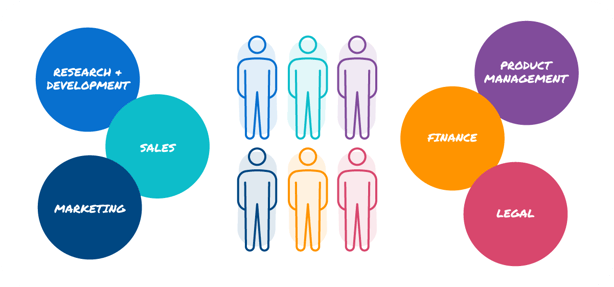
- Considering product duos or trios. We see the most productive agile companies pairing a product manager with a program manager, splitting decision-making from task management. A business requirements analyst who can elaborate backlog items created by product managers makes this even more effective, creating a highly productive trio.
- Watching for burn-out. Great PMs don’t complain and may not recognize how overextended they are. As product executives, we need to protect and nourish our PMs the same way they protect and nourish their products.
sound bytes
Agile development drives the need for more intensive product management involvement in the day to day activities so while the engineering may celebrate a great burn down chart, it may be burning up your product managers. To avoid PM burn-out make sure your product team is staffed, trained and appreciated for taking on this bigger role.